
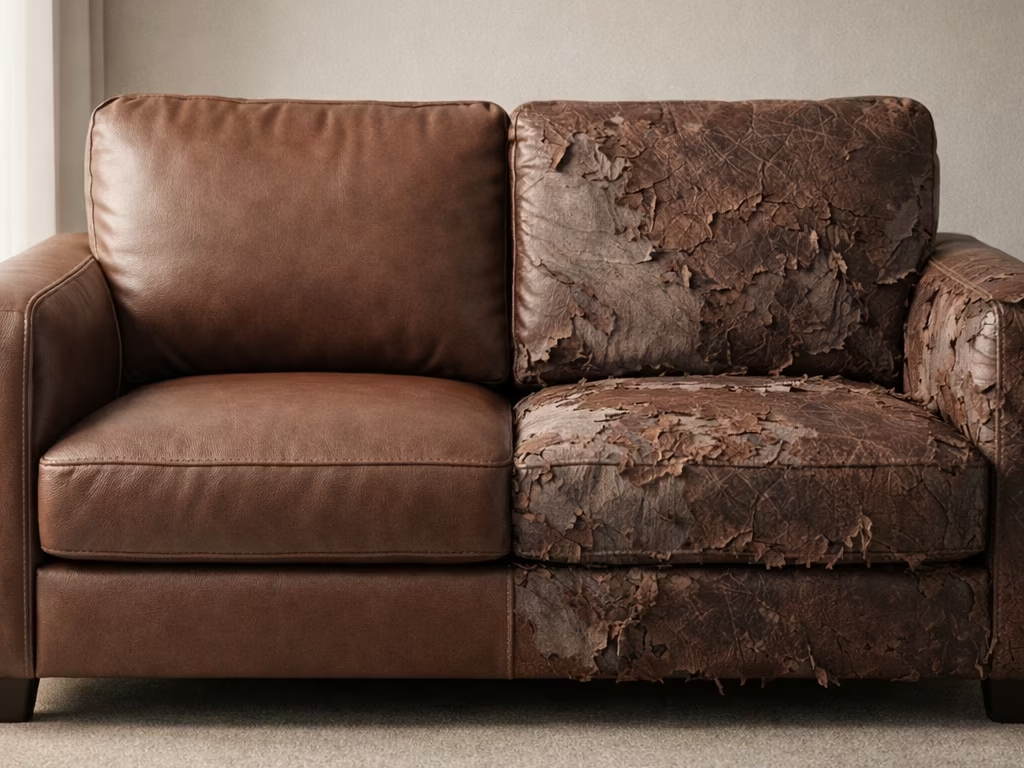
Buying a leather sofa is often a long-term investment for many homeowners. A well-made genuine leather sofa can last 10 to 15 years or even longer, while synthetic leather sofas may begin to peel or crack after just a few years.
However, many customers find it difficult to tell the difference between real leather and fake leather when they visit a showroom or browse online.
Some sofas are marketed as “leather sofas”, but in reality they may be made from PU leather, PVC leather, or bonded leather. These materials look similar at first but behave very differently over time.
Understanding how to identify genuine leather can help you avoid costly mistakes and ensure your sofa remains beautiful and comfortable for many years.
In this guide, we will walk you through several practical ways to identify whether a sofa is made from real leather or synthetic leather.
1. Look at the Natural Grain Pattern
One of the easiest ways to identify genuine leather is by examining the surface grain.
Real leather comes from animal hide, which means every piece has natural variations.
You may notice:
- Slight wrinkles
- Small pores
- Irregular grain patterns
- Natural marks or scars
These imperfections are completely normal and actually indicate authenticity.
Fake leather, however, is manufactured using plastic materials and moulds. As a result, the surface pattern often looks too perfect and repeated across the sofa.
If the texture looks identical everywhere, there is a high chance the material is synthetic.
2. Touch the Leather Surface
Touch is another important way to distinguish between real leather and fake leather.
Genuine leather typically feels:
- Soft and supple
- Warm to the touch
- Flexible
- Natural
When you press genuine leather, it may form small wrinkles and then return to its original shape.
Fake leather usually feels:
- Stiffer
- Cooler
- Slightly plastic-like
This difference may be subtle at first, but it becomes more noticeable with use over time.
3. Check the Backing Material
If possible, check the backside or edges of the material.
Real leather usually has a suede-like underside, because it is the natural backside of the animal hide.
Synthetic leather often has:
- Fabric backing
- Foam layers
- Plastic coatings
This layered construction is a common characteristic of PU or PVC leather.
4. Smell the Material
Genuine leather has a very distinctive smell that many people recognise immediately.
It is often described as:
- Rich
- Natural
- Slightly earthy
Fake leather tends to smell like plastic or chemicals, especially when the sofa is new.
While smell alone should not be the only method used, it can provide another useful clue.
5. Observe How the Material Ages
One of the biggest differences between genuine leather and synthetic leather appears after a few years of use.
Real leather usually develops a natural patina over time, giving the sofa more character.
Synthetic leather often shows signs such as:
- Peeling
- Cracking
- Flaking surfaces
This is particularly common in PU leather sofas, which rely on a plastic coating that can deteriorate with age.
In humid climates such as Malaysia, this issue may appear even faster.
| Feature | Genuine Leather | PU Leather | PVC Leather |
|---|---|---|---|
| Aging Over Time | Ages beautifully and develops character | More likely to wear out, peel, crack, or develop a dull and dirty-looking surface over time | More likely to harden, crack, or peel with age |
| Estimated Durability | 8 to 15 years depending on quality and usage | 1 to 5 years, depending on quality and usage | 3 to 6 years, depending on quality and usage |
6. Understand the Different Types of Leather
Common examples include:
Full Grain Leather
The highest quality leather with the natural surface intact.
Top Grain Leather
A refined leather surface that offers durability and a smooth finish.
Half Leather Sofa
Real leather on the contact areas with synthetic material on the outer parts.
PU or PVC Leather
Completely synthetic materials designed to imitate leather.
Knowing these categories helps consumers make better comparisons when shopping for a sofa.7. Price Can Be an Important Indicator
Genuine leather production involves several complex processes including tanning, finishing, and quality control.
Because of this, real leather sofas typically cost more than synthetic alternatives.
If a sofa is advertised as a “leather sofa” but sold at an unusually low price, it is worth asking more questions about the material used.
Transparency about materials is usually a sign of a trustworthy retailer.
Why Many Leather Sofas Start Peeling
One of the most common complaints from sofa owners is peeling surfaces.
In most cases, this occurs because the sofa is made from synthetic leather rather than genuine leather.
PU leather and bonded leather rely on plastic coatings that can degrade over time. Once the coating begins to break down, peeling may occur.
Genuine leather behaves very differently. Instead of peeling, it tends to age naturally and develop character.
Why Genuine Leather Sofas Last Longer
A properly crafted genuine leather sofa can remain comfortable and attractive for many years.
This durability comes from several key factors:
- Strong natural leather fibres
- Breathable material that adapts to body temperature
- Resistance to cracking compared to synthetic coatings
For this reason, genuine leather has remained one of the most trusted materials in furniture making.
Experience Genuine Leather at Pelle Haus
At Pelle Haus, we believe a sofa is more than just furniture. It is the place where families gather, relax, and spend time together.
Our sofas are crafted using 100% genuine cow leather, selected for durability, comfort, and natural beauty.
Each sofa is also designed with organic latex seating and personalised comfort options, allowing customers to enjoy long-lasting support and relaxation.
If you are considering a leather sofa and would like to experience the difference between genuine leather and synthetic materials, we welcome you to visit our showroom in Sungai Buloh.
Seeing and feeling the material in person is often the best way to understand the quality.
Conclusion
Learning how to identify real leather can help you make a more informed decision when purchasing a sofa.
By paying attention to texture, smell, flexibility, and construction, you can better distinguish between genuine leather and synthetic materials.
A genuine leather sofa is an investment that can bring comfort and style to your home for many years.
Taking the time to understand the materials ensures that you choose a sofa that truly meets your expectations.