
When shopping for a leather sofa, many people focus on the design, colour, comfort, and price. But there is one detail that often gets overlooked — is the sofa full leather or half leather?
This matters more than most people realise.
At first glance, both may look similar in the showroom. Both may even be described as “genuine leather sofa” by the salesperson. But the actual material construction can be very different, and that difference affects the sofa’s durability, ageing, feel, maintenance, and long-term value.
If you are planning to invest in a leather sofa for your home, understanding the difference between full leather and half leather can help you make a smarter decision and avoid disappointment later.
In this guide, we’ll explain:
- what full leather means
- what half leather means
- the pros and cons of each
- why the difference affects long-term usage
why Pelle Haus chooses to focus only on full leather sofas
What Is a Full Leather Sofa?
A full leather sofa means the sofa is upholstered entirely in genuine leather on all visible and covered outer areas, including:
- seat cushions
- backrests
- armrests
- front panels
- side panels
- rear panels
In simple terms, the entire sofa is wrapped in genuine leather, not just the parts your body touches.
This gives the sofa a more consistent material quality throughout the whole piece.
Depending on the brand and product specification, the leather used may be top grain leather, full grain leather, or other genuine leather grades. But the key point is this: the sofa is not mixed with synthetic leather on the outer body panels.
What Is a Half Leather Sofa?
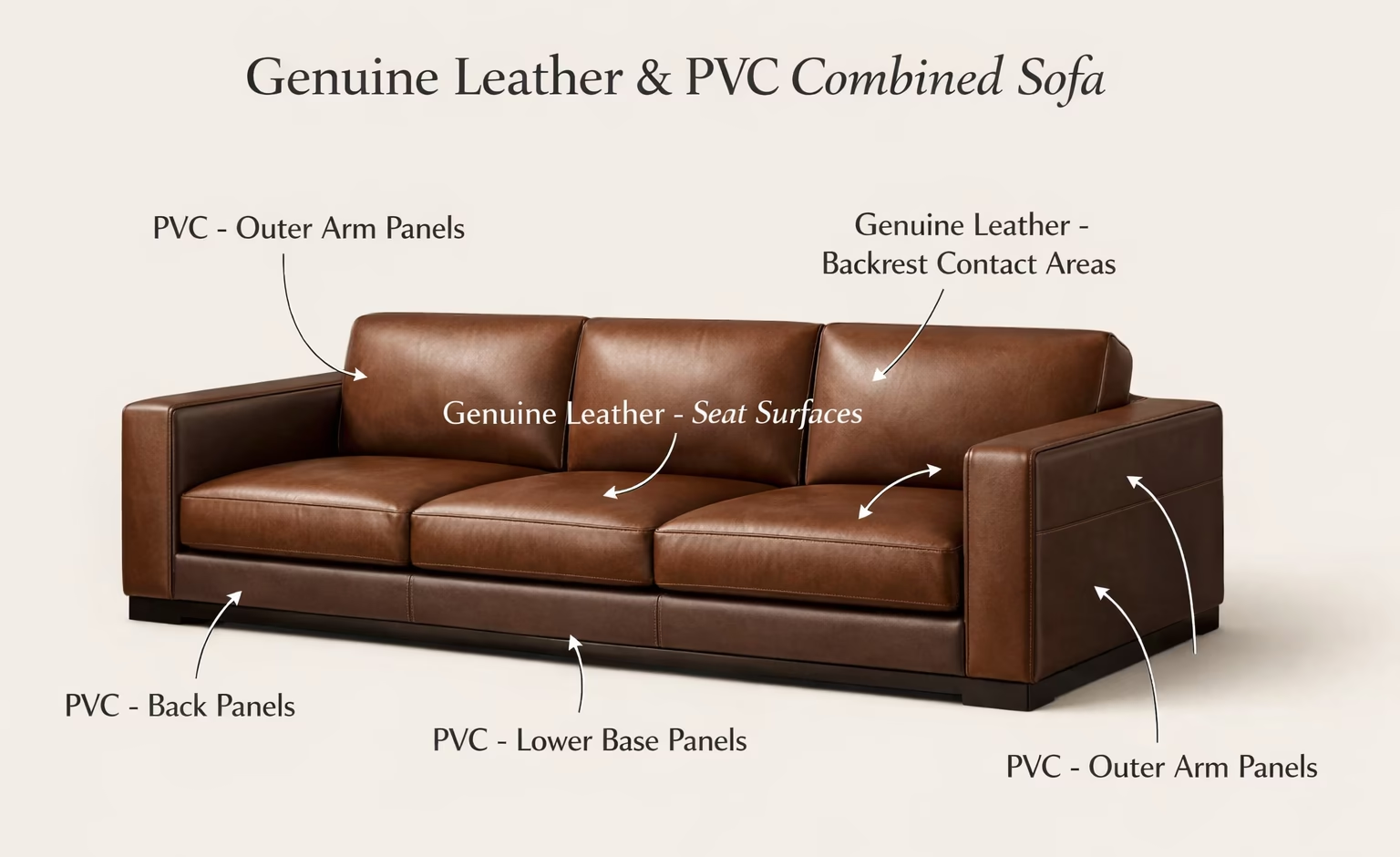
A half leather sofa usually means that only the main contact areas are made of genuine leather, such as:
- seat surfaces
- backrest contact areas
- arm contact areas
The remaining parts of the sofa are then covered with synthetic materials, usually PU, PVC, faux leather, or leather match material. These synthetic sections are commonly used on:
- sofa sides
- outer arm panels
- back panels
- lower base panels
This is why half leather sofas are usually more affordable than full leather sofas.
From the front view in a showroom, a half leather sofa can look very similar to a full leather sofa. But over time, the material difference may become more obvious.
Why Do Some Brands Use Half Leather?
The main reason is cost control.
Genuine leather is an expensive material. Using real leather for every outer section of the sofa significantly increases material cost. By using genuine leather only on the touch points and synthetic leather on the rest, brands can lower the selling price and make the sofa more accessible to a wider market.
This is not automatically “wrong.” Half leather sofas do have their place in the market.
For some buyers, a half leather sofa may be a practical option if:
- budget is the main concern
- the sofa is for light use
- long-term ageing is not a priority
- they simply want the leather feel only on the sitting areas
But it is important for the customer to know exactly what they are buying.
The problem happens when a sofa is marketed too broadly as a “leather sofa” without clearly explaining that only part of it is genuine leather.
The Main Difference Between Full Leather and Half Leather
The biggest difference is not just price.
It is about material consistency over time.
A full leather sofa ages as one material. Genuine leather has natural characteristics. It softens, develops character, and changes gradually as it is used. This creates a more uniform ageing process across the entire sofa.
A half leather sofa ages as a mix of two different materials:
- genuine leather on one area
- synthetic leather on another area
These materials do not behave the same way over the years.
That is why after some time, some half leather sofas may start to show visible differences in:
- texture
- gloss level
- softness
- colour tone
- surface ageing
- peeling or cracking risk on the synthetic sections
Even if the seating area still looks fine, the synthetic side or back panels may age differently.
Full Leather Sofa: Pros and Cons
Pros
- Better overall durability
Because the entire outer sofa uses genuine leather, you get a more consistent material performance throughout the whole piece. - More natural ageing
Real leather tends to mature with character. It may soften and develop a richer appearance over time if properly maintained. - More premium feel
A full leather sofa often feels more luxurious because the entire piece is wrapped in the same quality material. - Better long-term consistency
Since the whole sofa uses genuine leather, there is less risk of one section ageing very differently from another. - Stronger long-term value
For buyers who want a sofa to last many years, full leather usually gives better long-term confidence.
Cons
- Higher price
Genuine leather on all panels means higher material cost, so full leather sofas are more expensive than half leather models. - Requires proper care
Like any genuine leather product, it should be maintained correctly to keep it in good condition.
Half Leather Sofa: Pros and Cons
Pros
- More affordable
This is the biggest advantage. Half leather allows customers to enjoy genuine leather on key contact areas at a lower price point. - Similar front-view appearance at first
In many showroom settings, a half leather sofa may look quite close to a full leather sofa when viewed from the front. - Good for lower-budget buyers
It can be a practical middle-ground option for customers who want some leather feel without going into a full leather budget.
Cons
- Mixed material ageing
Real leather and synthetic leather do not age the same way. - Higher risk on synthetic panels over time
Depending on usage, environment, and material quality, synthetic sections may be more prone to surface deterioration compared to genuine leather. - Less consistency in feel and appearance
Over time, the difference between the genuine leather area and synthetic area may become more noticeable. - Can create confusion for consumers
Some buyers only realise much later that not all parts of the sofa are genuine leather.
Why This Difference Matters in Real Homes
In real life, a sofa is not just looked at from the front.
You live with it every day.
You walk around it. You clean it. Your children lean against the sides. Guests see the back panels. Sometimes your sofa sits in the middle of the living room, where the rear side is fully visible.
That is why the material used on the sides and back matters too.
A sofa is a long-term home item. For many families, it is one of the most used pieces of furniture in the house. So understanding the full construction matters more than just looking at the seat surface.
Is Half Leather Bad?
Not necessarily.
A half leather sofa is not automatically a bad product. It depends on:
- the honesty of the seller
- the quality of the synthetic material used
- the customer’s expectations
- the intended budget and usage
If a customer clearly understands that the sofa is half leather and is comfortable with that trade-off, then it can still be a reasonable purchase.
The real issue is lack of clarity.
Customers deserve to know exactly what they are paying for.
When buying any leather sofa, it is always worth asking:
- Which parts are genuine leather?
- Which parts are synthetic?
- What type of leather is being used?
- Will the sides and back also be genuine leather?
- How will the materials age over time?
These are good questions, and any transparent seller should be able to answer them clearly.
Why Pelle Haus Does Not Use Half Leather
At Pelle Haus, we choose to focus only on full leather sofas.
This is a deliberate decision, not an accident.
We know half leather exists in the market, and we understand why some brands use it. It helps reduce selling price and makes the sofa more affordable. But for us, that approach does not match what we want to deliver to our customers.
1. We Believe a Leather Sofa Should Be Honest in Material
When a customer buys a leather sofa, we believe the expectation is simple: the sofa should genuinely be leather throughout the outer body, not only on selected touch points.
We want our customers to feel clear and confident about what they are bringing home.
2. We Want Consistency Across the Whole Sofa
A sofa is one complete piece, not just the sitting area.
By using full leather, the entire sofa has better consistency in:
- appearance
- touch
- ageing
- long-term performance
We do not want the sides or back panels to behave differently from the seat over time.
3. We Focus on Long-Term Value, Not Just Lower Entry Price
At Pelle Haus, we are not trying to be the cheapest option in the market.
Our focus is to give customers lasting value, better confidence, and a more satisfying ownership experience over the years.
A cheaper sofa may look attractive at the beginning, but we always ask a deeper question:
How will this sofa look and feel after years of real living?
That long-term thinking is one of the reasons we stay committed to full leather only.
4. It Matches Our Quality Philosophy
Pelle Haus is built around the belief that customers deserve:
- clarity
- genuine material quality
- better comfort
- better long-term assurance
Choosing full leather is part of that philosophy.
We would rather stay true to a higher standard than compromise the construction just to chase a lower selling price.
How to Ask the Right Questions Before You Buy
If you are comparing leather sofas, here are a few important questions you should ask the seller:
- Is this sofa full leather or half leather?
Ask directly. Do not assume. - Which parts are genuine leather?
Get the seller to point out the exact areas. - What material is used on the sides and back?
This is where many half leather sofas use synthetic leather. - What type of genuine leather is used?
Not all leather is the same. - How will the sofa age over time?
A good seller should be able to explain this honestly. - What kind of warranty or after-sales support is provided?
This says a lot about how confident the brand is in its product.
Which One Should You Choose?
If your main priority is a lower upfront price, a half leather sofa may appear attractive.
But if your priority is:
- better long-term durability
- more consistent ageing
- material honesty
- premium feel
- stronger long-term value
then a full leather sofa is usually the better choice.
For many homeowners, a sofa is not something they want to keep replacing every few years. It is a major piece of the home, where families gather, rest, talk, and spend time together.
That is why material quality matters.
Final Thoughts
The difference between a full leather sofa and a half leather sofa may not always be obvious at first glance, but it becomes much more important over time.
A half leather sofa can serve a certain budget segment, but it is essential for customers to understand exactly what they are buying.
At Pelle Haus, we choose not to use half leather because we believe in giving customers a more complete, consistent, and honest leather sofa experience. Our focus is on full leather sofas because we care about how the sofa performs not just on day one, but for the years ahead.
If you are investing in a leather sofa, take the time to ask the right questions, understand the materials, and choose based on long-term value rather than first impression alone.
A sofa should not just look good in the showroom. It should continue to feel right in your home for years to come.
Looking for a genuine full leather sofa?
At Pelle Haus, we focus on full leather sofas crafted for long-term comfort, consistency, and peace of mind. If you would like to understand the material difference in person, visit our showroom or contact us to learn more.