
Buying a leather sofa is a big decision for most homeowners. It is not just about choosing a design that looks good in the showroom. A good leather sofa should also feel comfortable, suit your lifestyle, and last for many years.
Many people assume all leather sofas are the same, but that is far from the truth. Some leather sofas age beautifully and stay comfortable for 10 to 15 years or even longer, while others may start peeling, cracking, sagging, or losing comfort after only a short period of time.
That is why knowing what to look for before buying a leather sofa is so important.
In this guide, we will walk you through the key things every buyer should check before making a purchase, so you can choose a leather sofa with more confidence and avoid costly mistakes.
1. Check Whether It Is Genuine Leather
The first thing you should clarify is whether the sofa is made from genuine leather or synthetic material.
Some sofas are advertised as “leather sofas,” but that does not always mean the entire sofa is made from real leather. In some cases, only the contact areas are genuine leather, while the sides or back may use artificial materials. Other sofas may be made from PU leather, PVC leather, bonded leather, or other synthetic materials that look similar at first but perform very differently over time.
A genuine leather sofa usually offers:
- better durability
- a more natural texture
- better aging over time
- a more premium feel
It is always worth asking the seller:
- Is this genuine leather?
- Which parts are real leather?
- What type of leather is used?
Understanding this alone can already save you from buying the wrong sofa.
2. Understand the Different Types of Leather Used
Not all genuine leather is the same. This is one of the most important things to understand when buying a leather sofa.
The leather type affects the sofa’s feel, appearance, durability, maintenance, and price.
Full Grain Leather
Full grain leather is generally considered one of the highest quality leather categories because it keeps the strongest and most natural surface of the hide. It is valued for its durability, natural grain character, and ability to age beautifully over time.
Within this category, you may hear about:
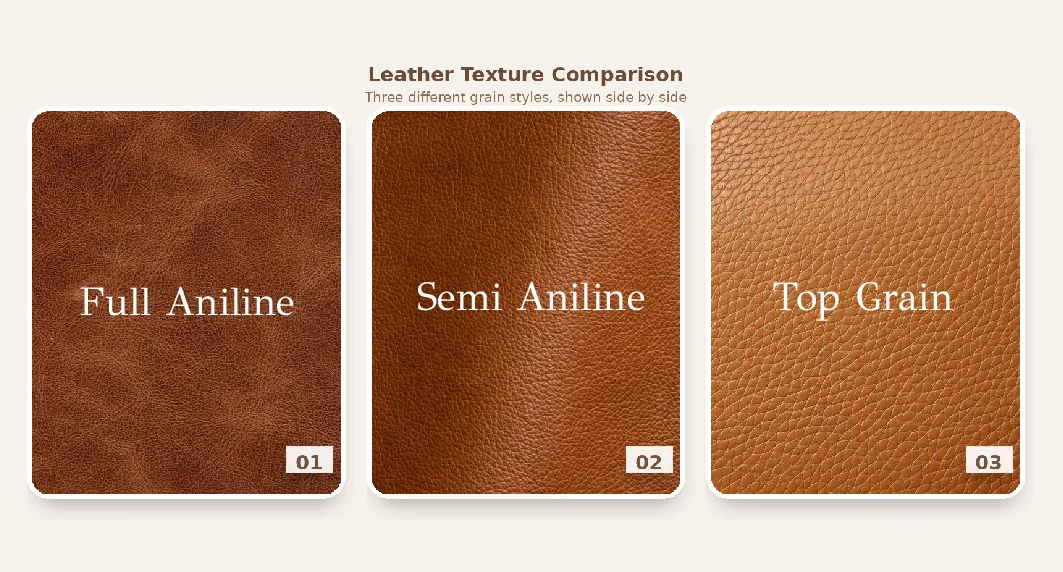
Full Aniline Leather
This is leather dyed with soluble dyes without adding a heavy protective top coating or embossed artificial grain. It keeps the most natural look and feel of the hide. Because of that, it feels very soft, luxurious, and natural, but it is also more delicate and usually requires more careful maintenance.
Semi-Aniline Leather
Semi-aniline leather is similar to full aniline leather, but with a light protective coating added on top. This helps improve stain resistance, colour consistency, and practicality for daily use, while still keeping much of the natural leather look and softness.
For many homeowners, semi-aniline leather offers a good balance between luxury and practicality.
Top Grain Leather
Top grain leather is a broad term, but in the sofa industry it is often associated with leather that has had its surface slightly corrected or refined to achieve a more even appearance. This is why top grain leather is commonly linked with corrected grain leather.
The confusion happens because “top grain” literally refers to the upper layer of the hide, but in actual market usage, many top grain sofas are made with corrected grain finishes.
Corrected grain leather is genuine leather, but the surface may be lightly sanded, buffed, embossed, or coated to reduce natural marks and create a more uniform finish. This makes it more consistent in appearance and often easier to maintain than more natural aniline leather.
Split Leather
Split leather comes from the lower layer of the hide after the top portion has been separated.
It is still real leather, but it does not have the same natural grain surface as full grain or top grain leather. Because of that, split leather is usually less durable, less premium in feel, and often needs additional finishing or coating to achieve a certain appearance.
Some manufacturers may use split leather in non-contact areas or lower-cost products.
That is why it is important to ask not only whether a sofa uses genuine leather, but also what type of genuine leather is being used and where it is used.
3. Feel the Leather Surface Yourself
A leather sofa should not only look nice — it should feel right too.
When you visit a showroom, touch the leather surface carefully.
Look out for:
- whether it feels natural instead of plasticky
- whether it has a soft, rich texture
- whether the grain looks too perfect or too artificial
- whether it feels breathable and comfortable to sit on
Real leather usually has natural variations in grain and texture. Synthetic materials often feel too smooth, too uniform, or rubbery.
A good leather sofa should feel inviting, not stiff and artificial.
4. Ask About the Sofa Frame
The frame is the hidden structure of the sofa, and it plays a major role in how long the sofa will last.
A beautiful leather sofa can still become a bad purchase if the internal frame is weak.
Ask what material is used for the frame. A good quality sofa usually uses strong hardwood or properly treated solid wood for better long-term durability.
A weak frame may lead to:
- creaking sounds
- instability
- looseness over time
- a shorter product lifespan
Many customers focus only on the leather, but the frame matters just as much.
5. Check the Seat Cushion Material
Comfort is one of the most important parts of a sofa, especially if you use it daily.
A sofa may feel soft in the showroom, but the real question is whether it can maintain its comfort and shape over time.
Ask what is inside the seat cushions.
Common materials may include:
- foam
- high-density foam
- latex
- layered cushioning systems
A better cushioning system usually offers:
- better support for the body
- improved comfort for daily sitting
- less sinking over time
- better durability
If possible, sit on the sofa for a few minutes in different positions. Do not just sit for two seconds and stand up. Test whether it supports your lower back, thighs, and posture properly.
6. Consider Your Sitting Preference
Different people like different sofa comfort levels. Some prefer a firmer seat for better support, while others prefer a softer and more plush feeling.
This is why comfort should never be judged by appearance alone.
Before buying, think about:
- Do you prefer soft or medium-firm seating?
- Do you sit upright often, or do you like to lounge?
- Will elderly family members use the sofa?
- Do children often jump or play on it?
- Do you use the sofa mainly for TV, entertaining guests, or everyday family time?
A leather sofa should suit your lifestyle, not just your living room design.
7. Ask About Maintenance Requirements
Some customers avoid leather because they think it is difficult to maintain. In reality, a good leather sofa is usually not complicated to care for if you maintain it properly.
Basic maintenance often includes:
- wiping away dust with a soft damp cloth
- cleaning spills early
- using a proper leather care kit made specifically for sofa use
- avoiding harsh cleaners or products not meant for leather sofas
This is important because not every leather care product is suitable for sofa use. Some products may be designed for shoes, bags, or car seats, and may not be ideal for household sofa leather.
Before buying, ask the seller:
- How should I clean it?
- What products are safe to use?
- How often should I maintain it?
A trustworthy seller should be able to guide you clearly.
8. Ask About Heat, Cracking, and Durability
Many buyers worry that leather sofas are hot, crack easily, or require too much care.
These concerns usually come from past bad experiences with low-quality materials or incorrect maintenance.
A properly made genuine leather sofa can be:
- comfortable for daily use
- durable for many years
- easy to maintain with basic care
- less likely to peel compared to synthetic leather
Cracking usually happens because of poor material quality, lack of care, harsh exposure, or buying the wrong type of leather product in the first place.
It is always a good idea to ask the seller honest questions about durability and expected lifespan instead of assuming all leather sofas behave the same way.
9. Understand the Warranty and After-Sales Service
A leather sofa is a long-term purchase, so after-sales service matters.
Before buying, ask:
- What does the warranty cover?
- How long is the warranty?
- Does it cover the leather, frame, seat cushions, or mechanisms?
- Is after-sales service available if something needs adjustment or repair?
A seller who stands behind their product usually gives buyers more peace of mind.
Good after-sales support can make a big difference, especially for a product that is meant to last for many years.
10. Choose a Design That Matches Long-Term Use
Trendy designs can be attractive, but a sofa should still suit your home for the long run.
Think about:
- whether the size fits your space properly
- whether the colour suits your home style
- whether the shape works for your family routine
- whether the design will still look good a few years from now
Leather sofas are often a statement piece in the living room, so it is wise to choose something timeless and practical instead of purely following trends.
11. Compare Value, Not Just Price
Lastly, do not judge a leather sofa only by its selling price.
A cheaper sofa may cost less upfront, but if the material, support, and structure are poor, it may become more expensive in the long run when problems appear early.
Instead of asking only:
“Which sofa is cheaper?”
A better question is:
“What am I actually getting for this price?”
Look at the full value:
- leather quality
- seat comfort
- frame strength
- craftsmanship
- durability
- warranty
- after-sales support
A leather sofa is not just furniture. It is something you and your family will use every day, so quality matters.
Final Thoughts
Buying a leather sofa should not be rushed.
The more you understand about leather quality, internal materials, comfort, finishing, and after-sales support, the easier it becomes to choose a sofa that truly suits your home and lifestyle.
A good leather sofa should give you more than just a nice look in the showroom. It should provide comfort, confidence, and long-term value for years to come.
If you are shopping for a leather sofa, take your time, ask the right questions, and focus on overall quality rather than just appearance or price.
That is often the difference between buying a sofa that merely looks good today, and one that still feels good many years later.